



Moon phases change shape every day
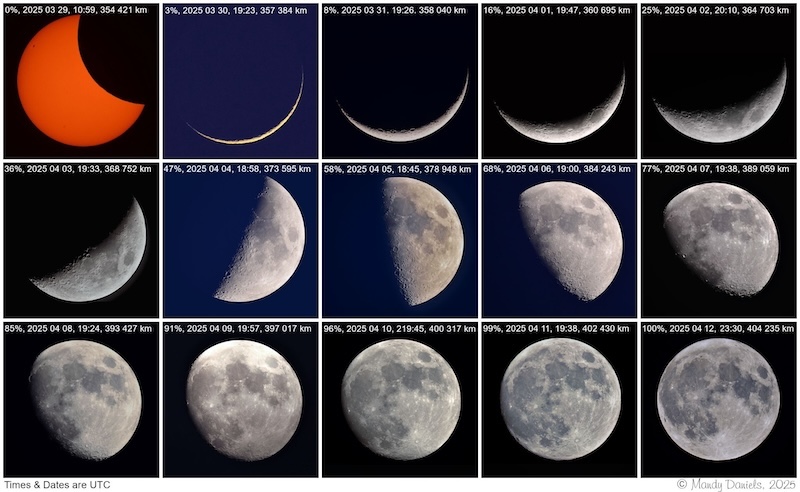
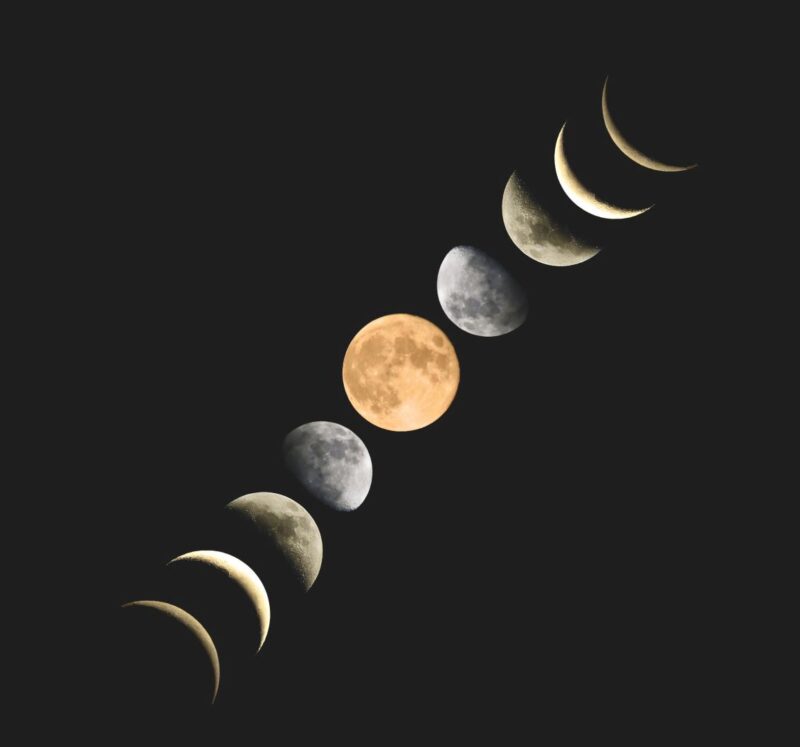
Why does the moon seem to change its shape every night? It’s because the moon is a world in space, just as Earth is. Like Earth, the sun always illuminates half of the moon; the round globe of the moon has a day side and a night side. And, like Earth, the moon is always moving through space. So as seen from our earthly vantage point, as the moon orbits around Earth once each month, we see varying fractions of its day and night sides: the changing phases of the moon. How can you understand moon phases? Here are four things to remember.
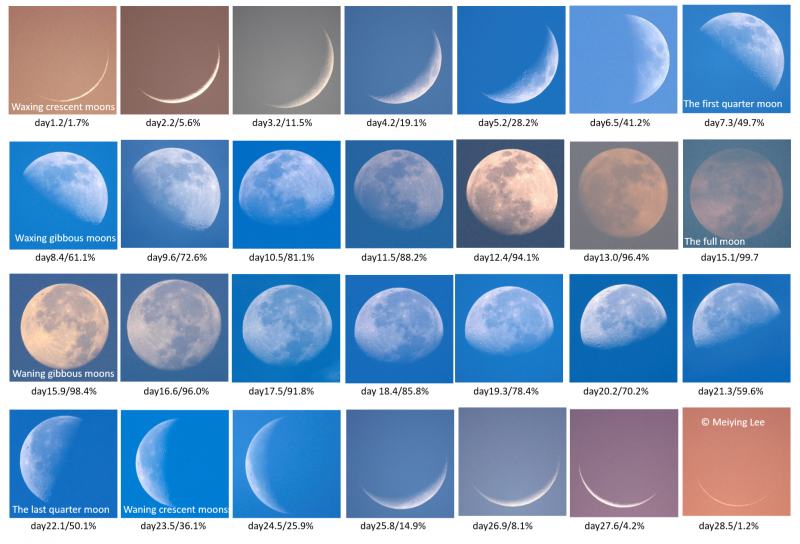
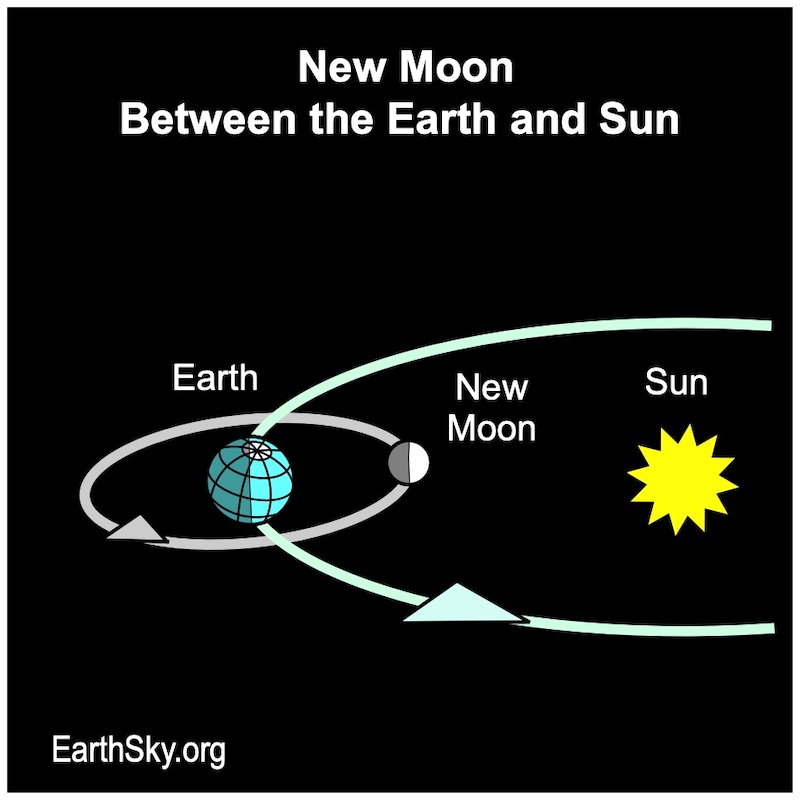
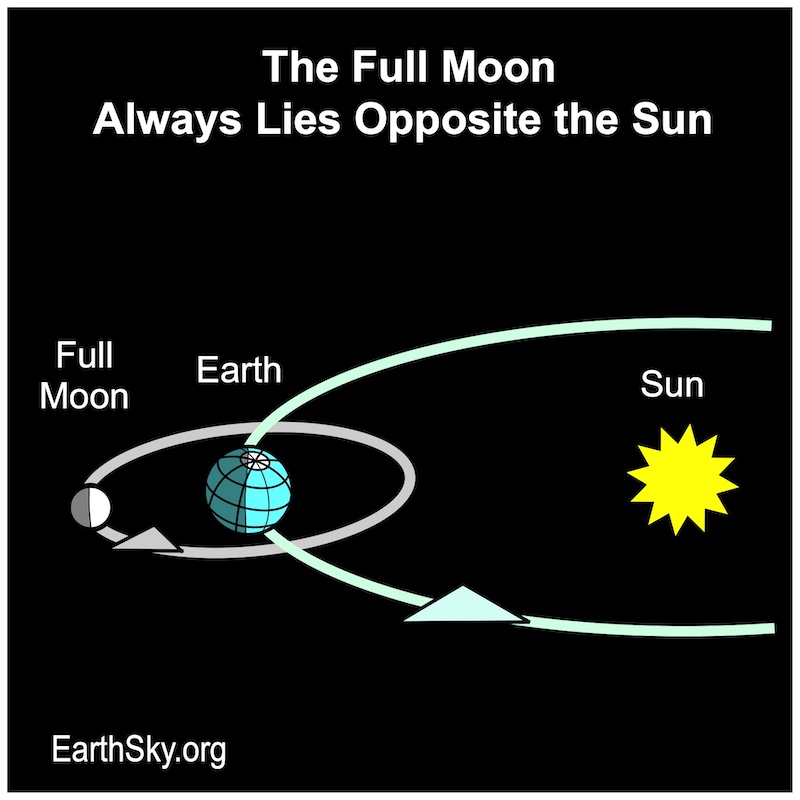
1. When you see the moon, think of the whereabouts of the sun.
After all, it’s the sun that’s illuminating and creating the day side of the moon.
The fact is, moon phases depend on where the moon is with respect to the sun in space.
But don’t just take our word for it. Go outside. No matter what phase of the moon you see in your sky, think about where the sun is. It’ll help you begin to understand why the moon you see is in that particular phase.
2. The moon rises in the east and sets in the west, every day.
It has to. The rising and setting of all celestial objects is due to Earth’s continuous daily spin beneath the sky.
So, when you see a thin crescent moon in the west after sunset, it’s not a rising moon. Instead, it’s a setting moon. In fact, it rose earlier in the morning soon after the sun rose.
3. The moon takes about a month to orbit the Earth.
Although the moon rises in the east and sets in the west each day (due to Earth’s spin), it’s also moving on the sky’s dome each day due to its own motion in orbit around Earth.
This is a slower, less noticeable motion of the moon. And it’s a motion in front of the fixed stars. So, if you just glance at the moon one evening – and see it again a few hours later – you’ll notice it has moved westward. That westward motion is caused by Earth’s spin.
You can detect the moon’s own orbital motion in the course of a single night. But you have to watch the moon closely, with respect to stars in its vicinity, over several hours.
Additionally, the moon’s eastward, orbital motion is easy to notice from one day (or night) to the next. It’s as though the moon is moving on the inside of a circle of 360 degrees. The moon’s orbit carries it around Earth’s sky once a month, because the moon takes about a month to orbit Earth.
So, the moon moves – with respect to the fixed stars – by about 12 to 13 degrees each day.

4. The moon’s orbital motion is toward the east.
Each day, the moon moves another 12 to 13 degrees toward the east on the sky’s dome. Then, Earth’s rotation takes a little longer to bring you around to where the moon is in space.
So the moon rises, on average, about 50 minutes later each day.
The later and later rising times of the moon cause our companion world to appear in a different part of the sky at each nightfall for the two weeks between new and full moon.
Then, in the two weeks after full moon, you’ll find the moon rising later and later at night.
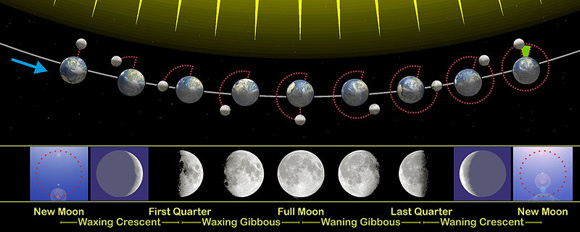
More details on individual moon phases at the links below
Follow the links to learn more about the various phases of the moon.
New moon
Waxing crescent
First quarter
Waxing gibbous
Full moon
Waning gibbous
Last quarter
Waning crescent
Bottom line: The moon is a world in space just as Earth is and half of it is always illuminated by the sun. As the moon orbits Earth, we on Earth’s surface see varying fractions of its lighted face, or day side. These are the changing phases of the moon. Four tips to understanding moon phases, here.
Like what you read?
Subscribe and receive daily news delivered to your inbox.
More from
Deborah Byrd


It’s time for Manhattanhenge! Here’s how to see it

Spica, the bright beacon of Virgo, is 2 stars
John F. Kennedy moon landing speech 65th anniversary


